

IVF Success Rates by Age: A Clear Look at the Data
For anyone considering IVF, one question rises above all others: “What are my chances of success?” It’s a question filled with hope, anxiety, and the need for clarity. The most honest answer, backed by decades of global data, is that age is the single most significant factor influencing the outcome of IVF treatment. Understanding this data isn’t meant to discourage, but to empower you with realistic expectations and informed choices for your family-building journey.
Let’s break down what the numbers actually show, in straightforward language.
The Unavoidable Truth: Age and Egg Quality
Our biological clock is primarily a story about eggs. Women are born with all the eggs they will ever have. As time passes, both the quantity and the genetic quality of those eggs naturally decline. This decline is gradual in our 20s and early 30s, but becomes more pronounced after age 35, accelerating rapidly after 40.
IVF treatment can help overcome many fertility challenges—like blocked tubes or male factor issues—by bringing eggs and sperm together outside the body. However, it cannot reverse the aging of the eggs. An embryo created from a chromosomally normal egg has a high chance of implanting and leading to a healthy pregnancy, regardless of the mother’s age. The core challenge is that the percentage of chromosomally normal eggs an individual produces decreases with age.
Decoding the Success Rates: Age Group by Age Group
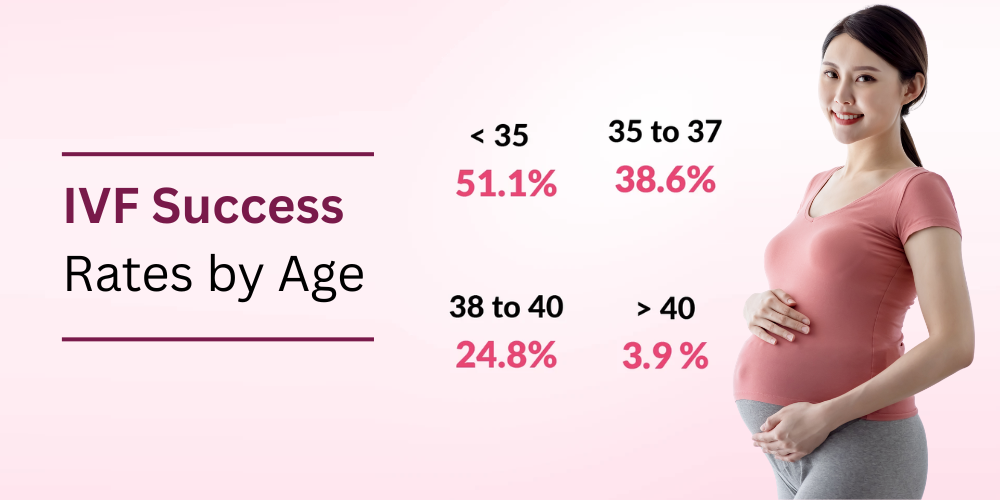
Success in IVF is typically measured as the “live birth rate per embryo transfer.” This is the percentage of transfers that result in the birth of a baby—the ultimate goal for most families. Here’s what the aggregated data from clinics worldwide generally shows.
Under 35: The Highest Probability of Success
- Success Rate:Approximately 40-55% live birth rate per embryo transfer.
- What This Means:This age group has the most favorable prognosis. The majority of eggs retrieved are likely to be chromosomally healthy, leading to viable embryos. For many in this group, the cause of infertility is often a specific issue like blocked fallopian tubes or endometriosis, which IVF effectively bypasses. The journey may still require multiple attempts, but the statistical odds are most encouraging here.
Ages 35 to 37: A Noticeable Shift
- Success Rate:Drops to about 35-45% live birth rate per embryo transfer.
- What This Means:This is the period where the decline starts to become more evident in the statistics. While success is still very much achievable, it may take more cycles to achieve a pregnancy. Doctors might recommend genetic testing of embryos (PGT-A) more frequently in this group to help select the embryo with the highest potential for implantation, potentially improving the efficiency of each transfer.
Ages 38 to 40: A Steeper Decline
- Success Rate:Falls further to around 20-30% live birth rate per embryo transfer.
- What This Means:This range represents a significant turning point. The rate of chromosomal abnormalities in eggs increases substantially. This often means fewer embryos are created from an IVF cycle, and a lower percentage of those embryos are viable. Patients in this age group are often advised to be more aggressive with treatment protocols and are strong candidates for genetic embryo testing. Persistence and realistic planning about the potential need for multiple cycles are key.
Ages 41 to 42: The Challenges Increase
- Success Rate:Typically between 10-20% live birth rate per embryo transfer.
- What This Means:Success becomes significantly more challenging. There is a higher likelihood of producing no viable embryos in a given cycle (a “no embryo to transfer” cycle). Many fertility specialists will be very candid about the odds at this stage. Some patients may begin to discuss the option of using donor eggs, which dramatically changes the success calculus, as it then depends on the age of the egg donor.
Ages 43 and Above: The Role of Donor Eggs
- Success Rate with Own Eggs:Often less than 5% per embryo transfer, and many clinics may even advise against using one’s own eggs due to the very low odds and higher risk of miscarriage.
- What This Means:Conception with one’s own eggs is rare but not impossible. However, the vast majority of successful pregnancies in this age group are achieved through fertility treatment in Varanasi and worldwide using donor eggs. Donor egg IVF uses eggs from a young, healthy donor, resulting in success rates that mirror the age of the donor (often back to that 40-55% range). This allows individuals to experience pregnancy and childbirth, even with diminished ovarian reserve.
Beyond the Woman’s Age: Other Crucial Factors
While age is king, the data is also influenced by other important pieces of your fertility puzzle:
- Cause of Infertility:Unexplained infertility, severe male factor, or uterine issues can impact success independently of age.
- Lifestyle Factors:Smoking, high BMI, and excessive alcohol consumption can negatively affect outcomes at any age.
- Clinic Expertise and Lab Quality:The skill of the medical team and the advanced technology of the embryology lab are critical. This is where seeking a reputable clinic matters immensely. For those exploring options locally, understanding the available protocols and technology for fertility treatment in Varanasi is an important step in the research process.
- Previous Pregnancies:A history of a prior successful pregnancy (even naturally) is a positive indicator.
- Embryo Status:Using frozen embryos (from a previous cycle), or genetically tested embryos, alters the success rate for a specific transfer.
The Emotional Equation: Data Meets Hope
Reading these statistics can feel cold. It’s vital to remember that you are not a statistic. A 30% chance is also a 70% chance of not succeeding in that particular cycle—both perspectives are mathematically true. The emotional rollercoaster of hope and disappointment is real.
The purpose of this data is not to strip away hope, but to ground your journey in science. It allows you to:
- Ask Informed Questions:In consultations, you can ask, “Given my age and specific diagnosis, what is a realistic success rate for me at your clinic?”
- Plan Logistically and Financially:Understanding that success may take more than one cycle helps in planning treatment costs and emotional energy.
- Explore All Options Early:For those in higher age brackets, knowing the data allows for earlier conversations about alternatives like donor eggs or embryos.
Finding Your Path Forward
If you’re considering IVF, start with a comprehensive fertility workup. Have open conversations with your partner (if applicable) about your goals, budget, and boundaries. Choose a clinic and doctor you trust, who communicates clearly and compassionately.
The data on age is powerful, but it’s only one part of your unique story. Modern reproductive medicine continues to advance, offering paths to parenthood that were unimaginable a generation ago. By starting with knowledge, you arm yourself with the greatest tool of all: the power to make choices that are right for you and your future family.
Frequently Asked Questions (FAQs)
Q: Can lifestyle changes improve my IVF success rate at an older age?
A: While a healthy lifestyle (good nutrition, maintaining a healthy weight, not smoking, managing stress) creates the best possible environment for pregnancy, it cannot reverse the age-related decline in egg quality. Think of it as optimizing the “soil,” even if the “seed” (the egg) has inherent age-related challenges.
Q: Why do some clinics have higher success rates than others?
A: Clinic success rates depend on patient selection (some clinics may treat older patients more frequently), the expertise of the embryology lab, the technology used, and the specific treatment protocols. Always look at data for your specific age group.
Q: Does the man’s age matter in IVF success?
A: Yes, but to a lesser degree than the female partner’s age. Advanced paternal age (over 40-45) can be associated with a slightly higher risk of genetic abnormalities in sperm and may lower success rates slightly, but the impact is not as dramatic as the woman’s age.
Q: How many IVF cycles should I expect to do?
A: There’s no one answer. Many succeed in one cycle, especially under 35. For women over 40, data often suggests that multiple cycles (3 or more) may be needed to accumulate a viable embryo. Your doctor should provide a personalized plan based on your initial test results and response to medication.
 Chat with us.